Atilivs Ironworks

Directions Website Contact the business

Atilivs Ironworks Infusing soul into every blade, embracing the art of warlike valor and excellence in craftsmanship.

**sold**.This Anglo Scandinavian inspired working knife has been available for a while, so I am dropping the price and p...
10/30/2026

**sold**.

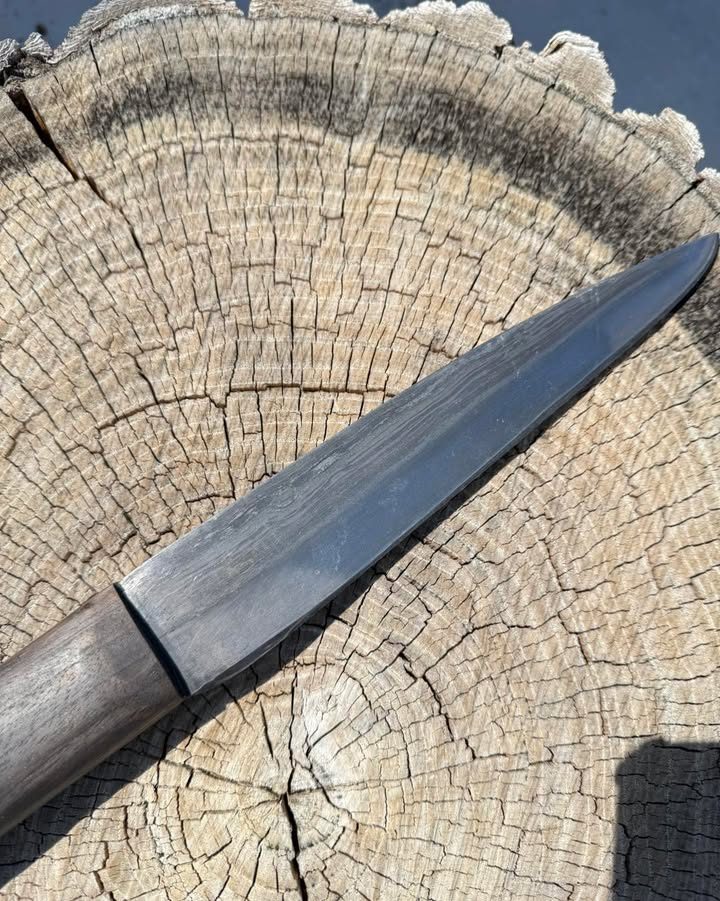
This Anglo Scandinavian inspired working knife has been available for a while, so I am dropping the price and putting it back out there.

It is loosely inspired by Viking Age and Anglo Scandinavian knife forms, especially working knives associated with York and the Coppergate finds.

This is not a direct reproduction.

It is longer and wider than many surviving examples, which gives it a solid feel in the hand. It would work well for reenactment kit, camp use, or display.

Specs:

Blade length: 216 mm
Handle length: 154 mm
Overall length: 370 mm
Blade width at shoulder: 40 mm
Blade thickness: 6 mm
Steel: 1080 and wrought iron
Handle: Walnut
Hardness: 60 to 65 HRC

Hand forged.
Hand finished.
Historically influenced and built to be used.

Price: $175 plus shipping.

Message me if you are interested.


I've just published my first historical research article on Atilivs Ironworks! I'm honestly pretty nervous to share this...
10/28/2026

I've just published my first historical research article on Atilivs Ironworks! I'm honestly pretty nervous to share this!

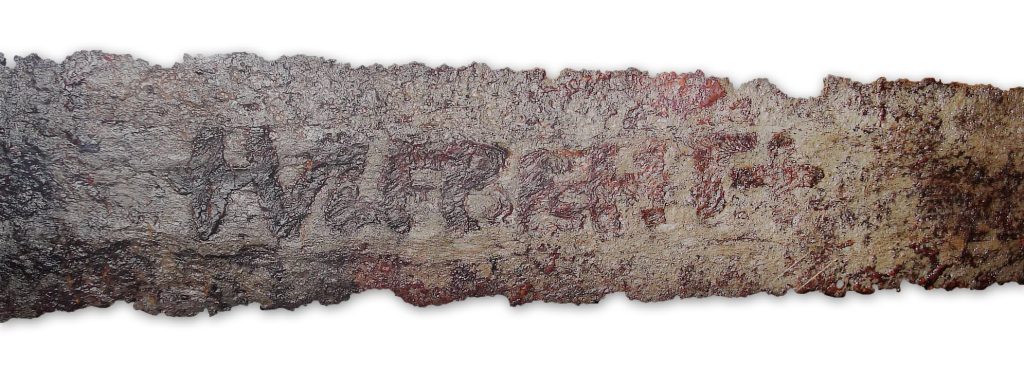
VLFBERHT swords have fascinated me for a long time. Like many people, I was originally drawn to the stories of legendary steel and swords that were supposedly centuries ahead of their time.

But the more I started reading the archaeological research, the more interesting these swords became.

Not all VLFBERHT swords were made the same way. Their inscriptions vary, their construction methods differ, and some of the popular stories surrounding them don't quite match the surviving evidence.

I wanted to understand what we actually know about these swords, how they were made, and what questions still remain unanswered.

This is my first attempt at putting this kind of research together for others to read. I've learned a lot through the process, and I know there's still plenty more to learn.

I'd really appreciate your thoughts and feedback, especially if you've studied these swords yourself.

The full article is available for free, along with a downloadable PDF.

https://atilivsironworks.com/research/vlfberht-swords/

I finally did something I have been wanting to do for a long time.I published my first research and process article on t...
10/25/2026

I finally did something I have been wanting to do for a long time.

I published my first research and process article on the Atilivs Ironworks website.

This one is called:

When a Sword Becomes a Knife

It’s an older project that I displayed at Kings Road. The project started as a Viking Age sword inspired by Birka grave Bj 581. The plan was a wrought iron core with high carbon steel edges.

The sword failed.

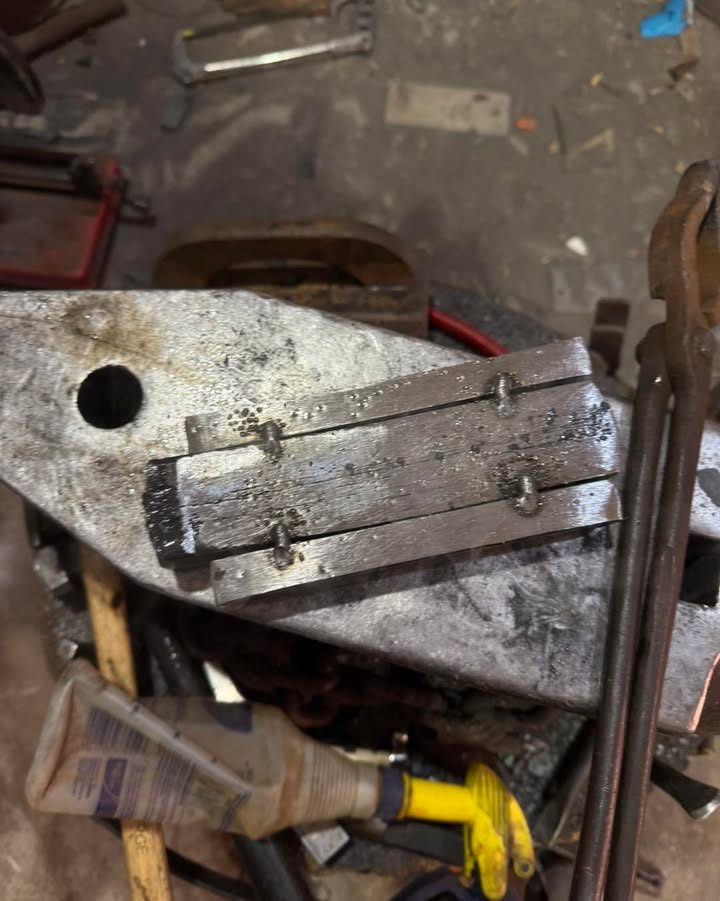
I started with too little material, drew the billet too thin, and then fought the fish mouth weld at the tip several times before finally admitting that I was not going to save it as a sword.

There was still a lot of good material left, so instead of throwing it into the scrap pile, I turned it into a Scandinavian long knife.

The article goes through the historical inspiration, the construction choices, every failed attempt at the tip, what I think went wrong, and what I will change when I try it again.

This is also the direction I want the website to take.

Finished work is great, but I want a place where I can document the research, the mistakes, the decisions, and what I actually learned from making these things.

This is the first one.

If you read it, I would genuinely appreciate your thoughts.

Link is in the comments.

10/21/2026

I’ve been wanting to get back into making more forging videos.

I enjoy sharing the work, but filming has always been a challenge for me. It is hard to stay focused on the steel while also thinking about camera angles, lighting, and whether I am actually getting useful footage.

Monday night I spent some time in the forge, set up the camera, and started getting back into the habit of recording.

I want to get better at capturing the process, the techniques, and the work that happens before the final result.

I still have a lot to learn behind the camera, just like I still have a lot to learn at the anvil.

So here is a little footage from Monday night.

For those of you who watch forging videos, what do you enjoy most?

The process?
The explanations?
Or just watching hot steel move under a hammer?


What’s on the workbench today?A little bit of everything.A couple of gladii, one getting a handle fix and another gettin...
10/20/2026

What’s on the workbench today?

A little bit of everything.

A couple of gladii, one getting a handle fix and another getting finished up. A few small pattern welded knives. A dagger. A small seax. A monosteel seax.

There is a lot in progress right now, and tonight I will also be teaching open forge night.

Different projects, different problems, and plenty of chances to keep learning.

The Messer is finished!This is my interpretation of a historically inspired Swordier-Elmslie Type 3 Langes Messer, and I...
10/17/2026

The Messer is finished!

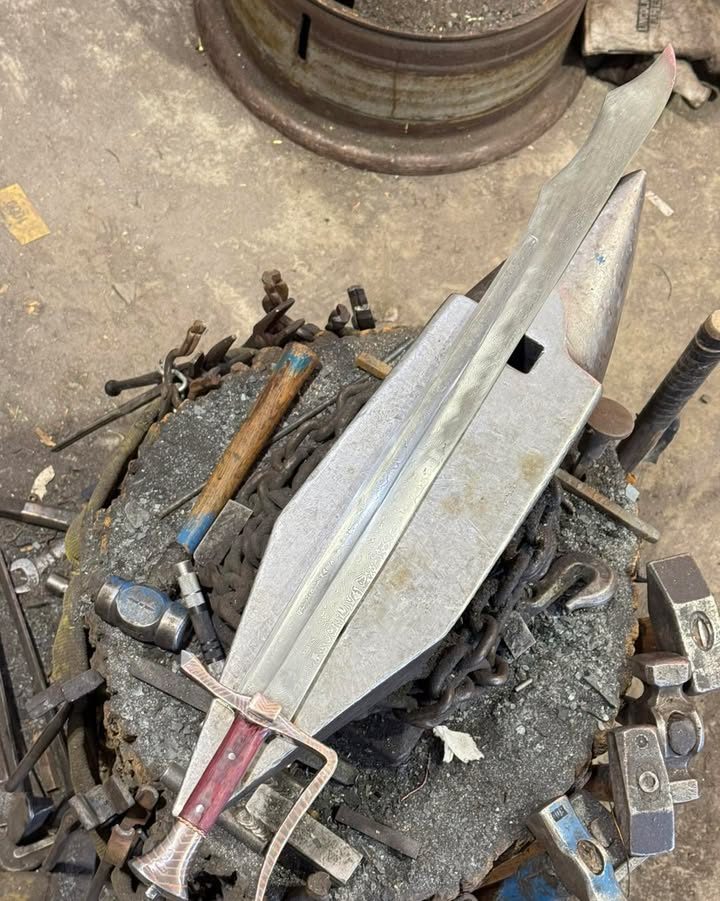
This is my interpretation of a historically inspired Swordier-Elmslie Type 3 Langes Messer, and I couldn’t be happier with how it turned out!

This one pushed me. I really tried to go above and beyond with the hilt work to give it that extra something. From shaping and fitting everything together to engraving and setting the copper inlays, I wanted to challenge myself and push my skills further.

Part of me absolutely loves it. The other part still wants more. More texture, I suppose.

The more I read and study surviving historical examples, the more I notice the details left behind by the craftsmen who made them. Decorative file work, forged textures, and little details that give each piece its own character.

I think we have a tendency today to chase this idea of everything being perfectly smooth and polished. But the more historical pieces I study, the more I’m drawn to those textures and evidence of the work that went into making them.

It’s something I want to explore in future builds.

The more I learn, the more I realize how much I still don’t know. Every project answers a few questions and leaves me with a dozen more!

That being said, I’m extremely proud of this sword. I love how everything came together, and I can’t wait to get started on the next builds.

Specifications:

* Blade: 26.5”
* Overall: 32.5”
* Width: 1.5”
* Weight: 1,255 g (2.77 lbs)
* Balance: 7” from guard
* Steel: 144 layers of 1084/15N20
* Handle: Purpleheart
* Inlays: Hand-engraved copper

One thing I hope people take away from following my work is that these skills can be learned. I’m still learning myself, and probably always will be.

If I can learn to do this, so can you!

Thanks to everyone who’s followed along with this build!

I’ve been reading about a boat burial discovered at Hillesøy in northern Norway, and I think this is the first burial I’...
10/16/2026

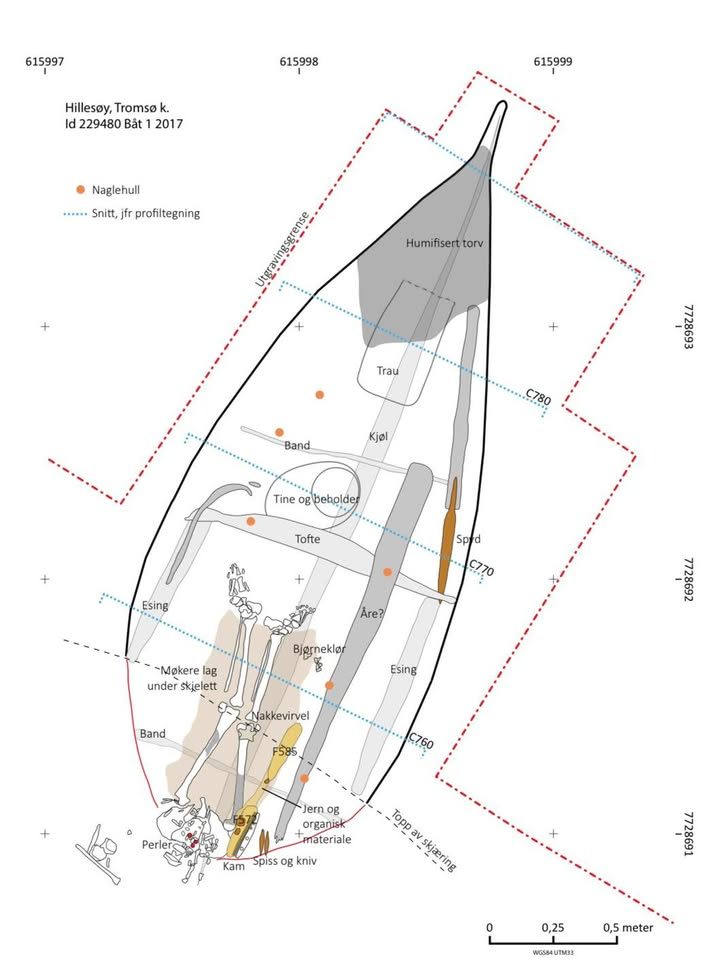
I’ve been reading about a boat burial discovered at Hillesøy in northern Norway, and I think this is the first burial I’ve really found myself getting lost in.

The grave dates to the late Merovingian or early Viking Age and contained a man buried in a boat with a single-edged sword, axe, an unusually large spear, a decorated comb, three beads, and what may have been a bearskin.

The spear is what initially caught my attention. Unlike the socketed spears we typically associate with Scandinavian weapons of this period, this one has a long tang. The excavation report discusses similarities with bear-hunting spears, including examples known from Sámi contexts.

That got me thinking about something Neil Price discusses in his work. We tend to look at the past through modern borders and cultural labels, but people living in northern Scandinavia weren’t isolated from one another. Norse and Sámi communities interacted, traded, and influenced one another.

The comb is interesting for a similar reason. It’s Scandinavian in form, but has decoration that may have been added locally, possibly reflecting changing styles.

Then there’s the man himself.

His skeleton showed evidence of healed injuries, including a compression fracture in his spine, along with signs of past infections. What happened to him? Did he fall while hunting? Was he a bear hunter? Did he kill the bear whose skin may have been buried with him?

I’d love for that to be his story. A man who hunted bears, survived some terrible injuries, and was eventually buried with the tools of his trade.

But that’s where I have to remind myself of something Price warns about. We can’t let the story we want to be true become the story we present as fact.

The evidence doesn’t tell us whether he personally hunted bears. The skin could have been a trophy, a gift, something acquired through trade, or something with a meaning we don’t fully understand.

What really sticks with me is the burial itself.

Someone took the time to bury this man in a boat, alongside weapons, personal objects, and possibly a bearskin. These were things that required materials, labor, and resources. They weren’t necessarily things people could sacrifice without thought.

Was he loved? Was he wealthy? Was he someone important in his community? Maybe all three.

We’ll probably never know his name, what caused his injuries, or what kind of man he was. But I think that’s what makes archaeology so fascinating. We have just enough evidence to start asking questions, and sometimes those questions are more interesting than the answers.

I’ve spent plenty of time studying historical swords and how they were made, but this burial has me thinking much more about the people who carried them.

Source: Anja Roth Niemi, Nordvegen på Hillesøy: Utgravning av båtgrav fra yngre jernalder (TROMURA 48, 2018).
10/06/2026

It has been a little while since we posted an update on the messer.

Most of the remaining work is fit and finish, and a few details are being kept quiet until the final reveal. Here is a small look at one of them.

I have been engraving the pommel to prepare it for copper inlay.

The blade is already forged and ground. The guard, pommel, and nagel are fitted. At this point, the project is getting close to final assembly.

This messer has taken a lot of planning, measuring, fitting, and correction. It is almost finished, and I am looking forward to showing the completed piece.


Address

Vernal, UT
84078

Alerts

Be the first to know and let us send you an email when Atilivs Ironworks posts news and promotions. Your email address will not be used for any other purpose, and you can unsubscribe at any time.

Contact The Business

Send a message to Atilivs Ironworks:

Shortcuts

Share